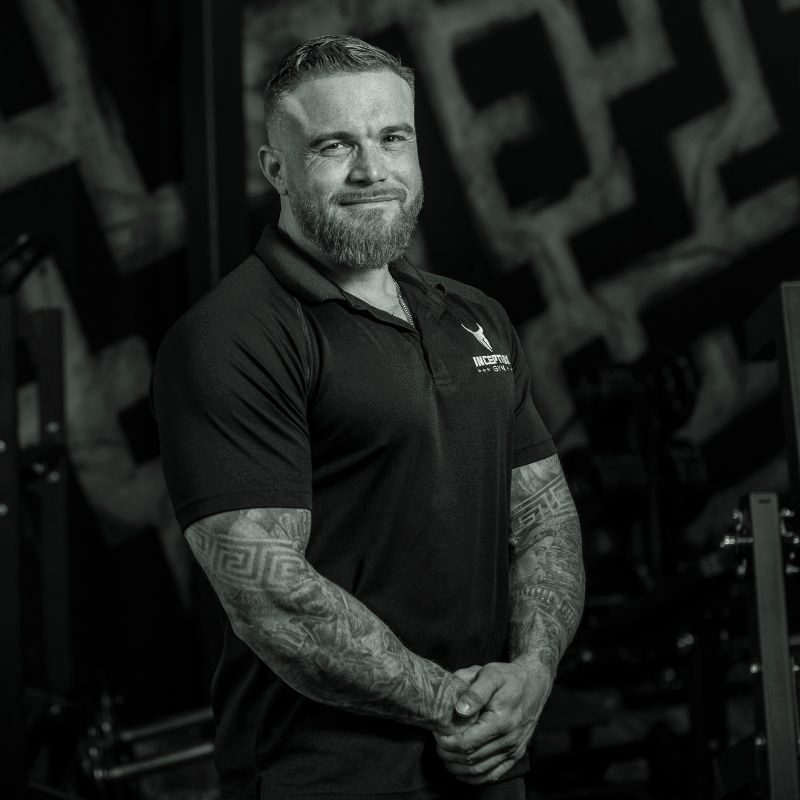

A changing waistline or weaker lifts in your forties deserves attention, but it does not establish a testosterone problem. Age-related hormone changes vary, and muscle health needs its own assessment. 1 2
Start with what has changed: training, everyday movement, meals, sleep and symptoms. The aim is to protect strength and health, not assume your body has reached a cliff.
The slow slide most men miss
Testosterone can decline with age, but not at a fixed rate for every man. In the European Male Ageing Study, hormone changes varied widely; weight gain and loss were associated with changes in testosterone. 1
Free testosterone is the unbound fraction. SHBG, a binding protein, can rise with ageing but commonly falls with obesity. This complicates interpretation of total testosterone. 3
Sarcopenia is not simply looking softer. Clinical assessment prioritises low strength, with low muscle quantity or quality used to confirm the diagnosis. It is more common later in life but can occur earlier. 2
A useful first question is whether your training and daily movement still resemble what you did ten years ago. That review is more actionable than assuming an unavoidable annual loss.
What the scale hides
Imagine losing 4 kg of lean mass while gaining 4 kg of fat: bodyweight would remain unchanged. This is an illustration, not an expected change for men in their forties. Lean mass is not synonymous with skeletal muscle.
Build a simple baseline:
- Record weight under similar conditions and look at the trend.
- Measure waist at the same location each time.
- Log loads, repetitions and how everyday tasks feel.
- Note persistent changes in energy, sexual function or recovery.
BIA is optional. It estimates composition from electrical measurements and prediction equations; it does not directly measure skeletal muscle. Hydration and the device's underlying model affect results. 2
Treat segmental lean mass and visceral fat ratings as estimates, not direct tissue measurements. Do not use phase angle as a standalone cellular-health verdict or substitute scan outputs for strength assessment. 2
If scanning, use the same device and preparation instructions. A quarterly review can be a convenient checkpoint, not a medical requirement. See BIA vs DEXA for the measurement comparison.
Training has to stay effective
You do not need to abandon a programme because you turned forty. Start with a schedule you can repeat, then adjust the exercises and workload to your current capacity.
Make strength training regular. Adult guidance recommends working major muscle groups on at least two days weekly. Three full-body sessions are one practical option, not a universal requirement. 4
For example, build sessions around a squat or leg press, a hip hinge, a push and a pull. Record your work and gradually add repetitions or load as technique and recovery allow.
Adapt exercises, not ambition. If back squats irritate your shoulders, consider a goblet or safety-bar squat. A trap bar is another hinge option. These are choices to trial, not automatically safer exercises for everyone.
Include aerobic activity. Aim towards 150 to 300 minutes of moderate activity weekly, or 75 to 150 minutes vigorous, or a combination. Start below that if needed and build gradually. 4
Two or three comfortable cycling or brisk-walking sessions can help organise the week. Zone 2 is an option, not a prerequisite for hormonal health or a replacement for strength work.
Protein that fits the whole day
For a healthy adult doing resistance training, around 1.6 g of protein per kg of bodyweight daily is a useful starting point. A large trial synthesis found diminishing additional fat-free-mass gains around this intake. 5
The often-quoted 2.2 g/kg was the upper confidence limit around that estimate, not a proven requirement. The research does not establish one ideal intake for every man over forty. 5
For 85 kg, 1.6 g/kg means 136 g daily; 2.2 g/kg means 187 g. These calculations use bodyweight, not fat-free mass.
Three or four meals can make the target manageable. Four meals averaging 35 g provide 140 g; three meals of 30 g provide only 90 g. Check the daily total rather than relying on a per-meal slogan.
Older adults can show anabolic resistance, a reduced muscle-building response to feeding. That does not establish a switch at forty or prove everyone needs the same meal dose. 5
Build meals around foods such as fish, eggs, yoghurt, meat, tofu or legumes. For food choices and planning, see how much protein you need.
Sleep and alcohol deserve attention
One experiment in ten young men reported daytime testosterone 10 to 15% lower after a week of five-hour sleep opportunities. It did not establish long-term muscle loss or a larger effect in older men. 6
Other small controlled studies found different results. Do not translate hours of missed sleep into a predictable testosterone reduction. 7
Allow roughly seven to nine hours for sleep, adjusting for your needs. Loud snoring, witnessed breathing pauses or persistent daytime sleepiness warrant a GP conversation about possible sleep disorders. 8
Alcohol can make sleep lighter and more interrupted, even when it initially feels sedating. Avoid using it as a sleep aid. 8
Record the actual drinks, serving sizes and timing for a week. Include them in your food record, rather than treating them as separate from your nutrition plan.
Labs worth discussing
Persistent low libido, fewer spontaneous erections or unexplained symptoms deserve assessment. Symptoms alone are not diagnostic, and routine testosterone screening is not recommended for otherwise well men. 3 9
Diagnosis requires compatible symptoms and consistently low results, usually from two separate fasting morning samples. Your clinician should set the timing and interpret the laboratory method. 9
Further tests depend on the findings:
- SHBG and appropriately assessed free testosterone can clarify borderline results.
- LH and FSH help distinguish testicular from pituitary or hypothalamic causes.
- Prolactin may be relevant when a central cause is suspected. 3
Ask which other tests would change your care. Do not assume you need fasting insulin, ApoB, oestradiol, vitamin D, ferritin and thyroid tests simply because you are over forty.
Where TRT actually sits
TRT is a prescribing decision, not a coaching tool. It can benefit men with appropriately diagnosed hypogonadism; it is not a general treatment for normal ageing or a disappointing body composition result. 9
Address reversible contributors alongside assessment. Weight management may be first-line when excess weight is the underlying cause, but you do not need to prove lifestyle discipline before seeking medical help. 9
Discuss fertility before treatment: testosterone can suppress sperm production. Treatment also requires monitoring, including haematocrit and appropriate prostate assessment. 3
Long-term safety remains incompletely established. Agree on the intended benefits, monitoring and review plan with your prescriber rather than treating TRT as a permanent commitment made from one result. 9
What to do this month
- Establish waist, weight and training baselines; a scan is optional.
- Put sustainable strength sessions and aerobic activity in your calendar.
- Check a few typical days of meals against your chosen protein target.
- Keep a sleep and alcohol record, and book a GP visit for persistent symptoms.
Review your records after roughly twelve weeks as a planning checkpoint. Decide what to adjust from the combined picture, not one scan. Agree any blood-test follow-up with your clinician.