
Cooled rice. Cooled potato. Familiar foods, with some starch that becomes harder to digest after cooking and cooling. Resistant starch offers a useful preparation option, not a guaranteed glucose fix. 1 2
What resistant starch actually is
Resistant starch escapes digestion in the small intestine and reaches the large intestine, where bacteria can ferment it. It behaves more like fermentable fibre than ordinary digestible starch. 1
Three categories are especially useful for understanding everyday foods: 1
- RS1: starch physically protected within food structures, including grains and legumes.
- RS2: naturally resistant starch granules, found in foods such as underripe bananas.
- RS3: retrograded starch formed after cooking and cooling.
Cooking with water gelatinises starch. Cooling lets some starch chains reorganise into structures that digestive enzymes find harder to break down. This changes a fraction of the starch, not the whole carbohydrate serving. 2
Overnight refrigeration is a practical routine, not a proven minimum. One rice trial used 24 hours at 4°C; it did not establish that every food needs 12 hours or that longer chilling is always better. 2
Familiar NZ foods to use
There is no reliable highest-yield shopping list. Rice research shows that variety and preparation affect resistant-starch content, but a higher measured amount does not automatically mean a lower glucose response. 3
- Potatoes: boil or steam, then chill for potato salad or a reheated side. Cooked, cooled potatoes are an established source. 1
- Rice: prepare ahead for lunch bowls or fried rice. Choose jasmine or basmati to suit the meal, rather than assuming one always wins on resistant starch. 2 3
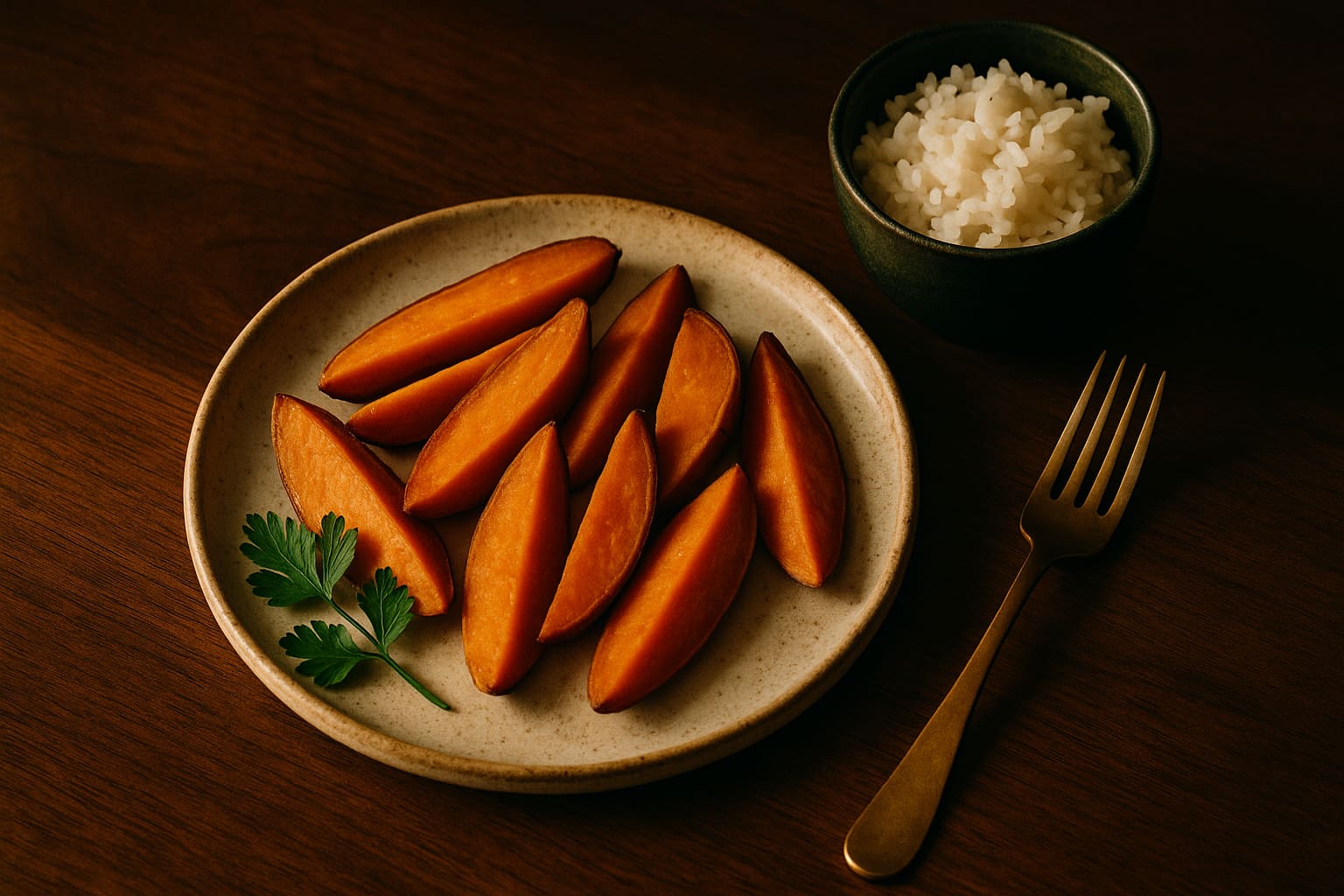
- Kūmara: roast and chill for salads or bowls. Keep this as a meal-prep option, not a claim that orange or gold kūmara delivers a proven glucose benefit.
- Legumes: lentils, chickpeas and beans already provide resistant starch. They do not need a special overnight-cooling ritual to qualify. 6
- Rolled oats: overnight oats are a convenient option. Food-composition estimates are not proof that every cold-soaked recipe beats an equivalent porridge serving. 1
- Underripe bananas: another source. Try a small amount in a smoothie if you enjoy the flavour and texture. 6
Agria or Rua potatoes can still feature in your cooking. What is missing is evidence to rank these NZ varieties above alternatives for resistant-starch yield or clinical benefit.
Glycaemic and metabolic effects
The immediate idea is straightforward: starch that resists small-intestinal digestion is not absorbed there as glucose. But the size of the change in a real meal needs testing. 2
In a crossover trial of 15 healthy adults, rice chilled for 24 hours and reheated contained 1.65 g resistant starch per 100 g, versus 0.64 g when freshly cooked. 2
The chilled preparation lowered the measured glucose response over time. This was one rice variety and an acute meal test, not evidence of a standard percentage reduction or lasting diabetes improvement. 2
A separate trial in 21 adults found no significant difference in glucose response between two reheated rice preparations with different resistant-starch contents. Results are not uniform. 3
The second-meal effect means an earlier meal influences glucose after a later one. A 25-person trial found a lower lunch response after a morning glucose drink containing a manufactured resistant-starch ingredient. 4
That does not establish the same effect from leftover kūmara or oats. Circulating short-chain fatty acids did not significantly increase after the starch treatment, so attributing the result simply to butyrate is unjustified. 4
There is also an insulin precaution. In 32 adults with type 1 diabetes, cooled rice lowered post-meal glucose but caused more hypoglycaemia when the same insulin dose was used. 5
If you use insulin, discuss deliberate changes with your diabetes team and follow your monitoring plan. Do not change medication or subtract a guessed resistant-starch amount from carbohydrate counts based on this article. 5
For interpretation rather than chasing individual readings, see what CGM data can tell you.
Gut health and the fibre picture
Fermentation produces short-chain fatty acids, including butyrate, which fuels cells lining the colon. That is a useful biological explanation, not a promise that potato salad will repair your gut. 6
Microbes also work together: some break starch down, while others use the resulting products. A study of 174 young adults found different bacterial and butyrate responses to different fibre supplements. 7
More bifidobacteria did not automatically mean more butyrate. These supplement findings cannot establish that chilled meals improve inflammation, insulin sensitivity or gut-barrier function. 7
Resistant starch is one part of the fibre picture. Australia and NZ adequate-intake values are 25 g daily for non-pregnant, non-breastfeeding adult women and 30 g for adult men, not one universal target. 8
Keep a variety of fibre-containing foods in the diet rather than relying on cooled rice to fill the gap. 6 8
For a gentle trial, start with a few spoonfuls to half a cup of one familiar food. This is a practical portion suggestion, not a prescribed resistant-starch dose. Increase only if comfortable.
Resistant starch ferments more slowly than FODMAPs and is not automatically an IBS trigger. Food choice, portion and personal tolerance still matter. 1
If you have IBS, diagnosed SIBO or another active gut condition, discuss persistent symptoms with your GP or dietitian rather than pushing through discomfort. There is no guaranteed adaptation deadline.
See how to increase fibre without bloating for the broader approach.
Cool and reheat safely
Reheating does not necessarily erase the increase in resistant starch: the rice trial tested reheated food. Do not sacrifice food safety to preserve it. 2
NZ Food Safety advises: 9
- Divide leftovers into shallow containers and refrigerate or freeze promptly, within two hours.
- Keep the fridge between 2°C and 5°C.
- Eat refrigerated rice and cooked foods served cold within two days.
- Eat other refrigerated leftovers served hot within four days.
- Reheat once, until piping hot throughout, above 75°C.
Rice can contain spores that survive cooking, and toxins formed during unsafe storage may survive reheating. Freeze portions intended for later in the week rather than keeping a week’s batch refrigerated. 9
Building it into weeknight cooking
Choose a routine that makes dinner easier rather than adding another nutrition task:
- Small cook-up: roast kūmara and boil potatoes for the next couple of meals. Label containers so their cooking date stays clear.
- Rice the day before: cook tomorrow’s rice tonight. Plan a lunch bowl or thoroughly reheated stir-fry.
- Overnight oats: mix rolled oats with milk or yoghurt and refrigerate. Choose this for convenience, without needing to prove it superior to porridge.
- Potato salad: dress cooled potatoes with olive oil, vinegar and herbs, then serve alongside your BBQ meal.
- Lentil lunches: drain and rinse canned lentils, then add them to salads or grain bowls.
These are serving ideas, not measured resistant-starch recipes. Apply the storage rules above to prepared leftovers.
What to do this week
- Choose one food you already enjoy, rather than changing every carbohydrate meal.
- Prepare enough for the next day and store it safely.
- Try lentils or chickpeas in two lunches if they suit you.
- Note comfort, hunger and convenience. These observations do not measure insulin sensitivity.
- If glucose management is part of your care, review your observations with your usual clinician.
Resistant starch is not exotic. It is a useful feature of familiar foods, with a place in normal cooking rather than a reason to fear freshly cooked carbohydrates.