
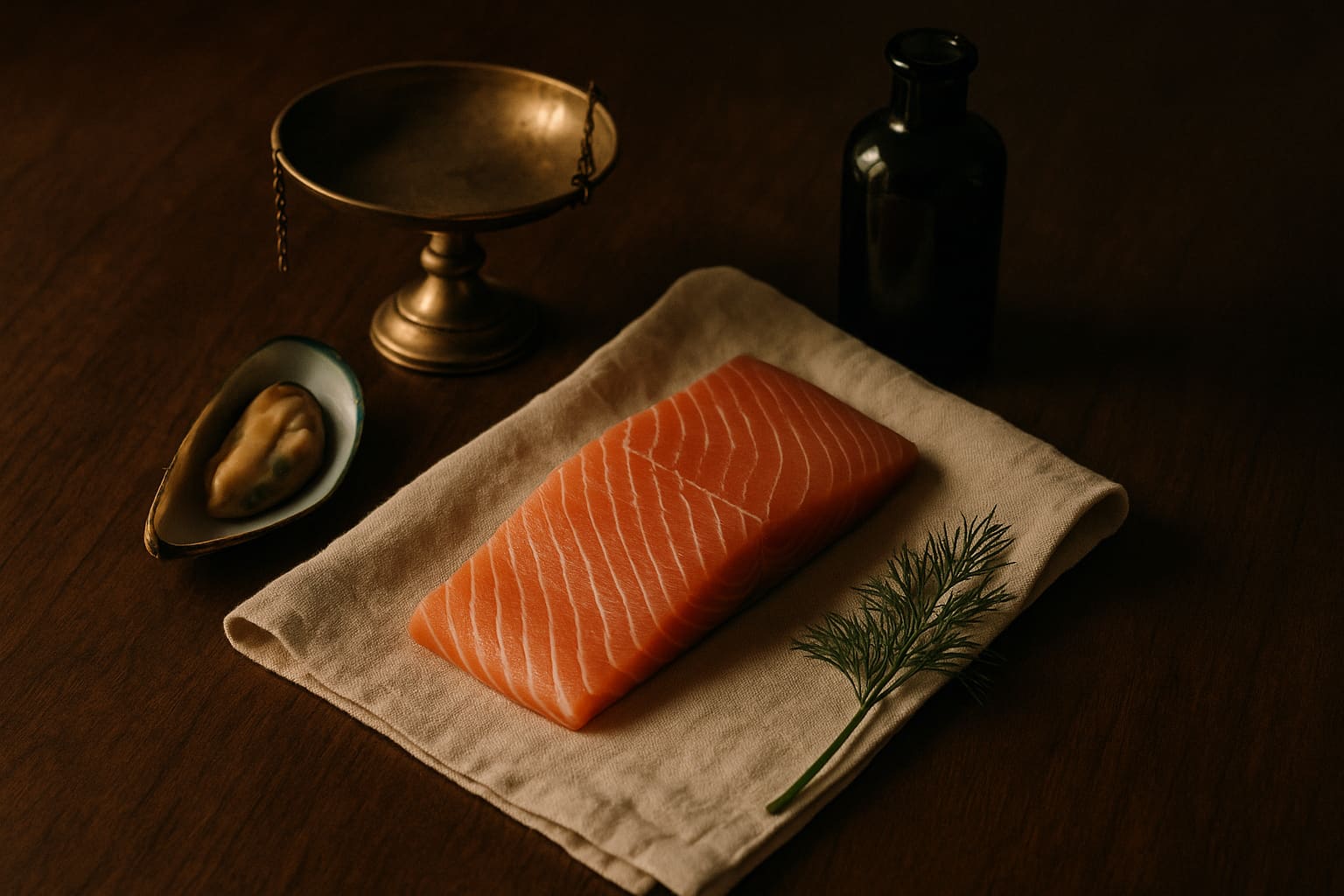
For everyday nutrition, start with oily fish and other seafood. Consider supplements when they fill an intake gap or support a clinician-led treatment plan, not because every adult needs capsules. 1
Which omega-3 source is best for New Zealanders?
The useful comparison is between a food, a particular extract and a labelled nutrient dose. There is no single winner for every purpose.
- Salmon and other oily fish: a practical food-first option, providing protein alongside omega-3 fats. 1
- Whole green-lipped mussels: another nutritious seafood choice, distinct from the extracts used in joint trials. 4 5
- Fish oil: worth considering when food intake is limited or a clinician recommends a specific formulation. 1
A joint-health claim, an EPA:DHA ratio and the words “1,000 mg fish oil” answer different questions. Start by deciding what you want the product to do.
EPA, DHA and ETA: different roles, not guaranteed results
EPA (eicosapentaenoic acid) helps form signalling molecules involved in inflammation. DHA (docosahexaenoic acid) is concentrated in the brain and retina. Their roles overlap. 2
Compare milligrams before ratios. An EPA:DHA ratio describes the mixture; it does not, by itself, establish a benefit for mood, joints or recovery. Formulation and the condition studied matter. 1
ETA means eicosatetraenoic acid. It is discussed in mussel lipid research, but should not be treated as a proven standalone joint treatment. 3
Laboratory studies show that mussel extracts can affect cyclooxygenase, or COX, enzymes. That is a possible mechanism, not proof that ETA alone relieves pain in people. 3
Green-lipped mussel: food and extracts are different
Whole green-lipped mussels provide protein, zinc, selenium, iodine and vitamin B12. An oil capsule does not reproduce that food package. 4
Try a portion of cooked mussel meat in tomato broth, chowder or a rice dish. When comparing portions, use edible meat weight rather than shell-on weight.
For joint symptoms, the evidence concerns specific preparations, not simply eating more mussels. Oil extracts and dried whole-mussel powders differ, so their milligram doses are not interchangeable. 5 6
In a 2017 trial, 80 people with hip or knee osteoarthritis received 600 mg daily of a particular extract or placebo for 12 weeks. The extract did not improve the primary pain outcomes during treatment. 5
A 2026 trial tested 1,000 mg daily of mussel powder for 12 weeks. Some pain and function measures improved, but the primary total symptom score was not significantly better in the main analysis. 6
That main analysis retained participants in their assigned groups. A per-protocol analysis favoured the powder, but this does not erase the uncertainty in the primary result. 6
If you choose a trial after discussing suitability, record pain and a practical task, such as stair climbing, before starting. Agree when to review it. Do not keep buying an ineffective product indefinitely.
Avoid mussel products if you have a mussel allergy. Persistent joint pain deserves assessment rather than repeated supplement changes. Supplements can cause allergic reactions or interact with medicines. 1
Salmon: a food-first option, not necessarily wild
NZ food-composition records include farmed king salmon. Species, production method and preparation all matter when comparing products. 4
Check the species and production information on the pack. Compare like with like, including whether the nutrient information describes raw or cooked fish.
Salmon contributes protein, vitamin D and B12 as well as fat. Food-composition figures are estimates for particular foods and preparations, not laboratory results for your fillet. 4
Two fish meals a week is a practical starting point. The Heart Foundation recommends two to three portions weekly, including oily fish. 1
For example, plan a 100 to 150 g cooked salmon portion with potatoes and vegetables. Use sardines on toast or mackerel with rice for another meal. These are meal ideas, not fixed therapeutic doses.
Do not assume every 150 g fillet supplies the same EPA+DHA amount. Use a traceable product value if you need a numerical estimate, rather than a generic promise.
Fish oil supplements: read the active amounts
Separate total oil weight from EPA and DHA. Product composition varies substantially, including between standard and concentrated oils. 8
For example, a label showing 1,000 mg fish oil, 180 mg EPA and 120 mg DHA supplies 300 mg EPA+DHA. Check whether those figures are per capsule or per multi-capsule serving.
That example has an EPA:DHA ratio of 1.5:1. Six such capsules would provide 1,800 mg combined EPA+DHA, not 2 g EPA. This is label arithmetic, not a recommended dose.
Triglyceride and re-esterified triglyceride forms can be better absorbed than ethyl esters, but all raise EPA and DHA levels. Absorption alone does not prove better health outcomes. 2
Compare cost per gram of the nutrient you actually want. Divide the bottle price by its total labelled EPA+DHA grams, or EPA grams if that is the agreed target.
Ask about batch-specific testing of potency and oxidation. A higher price, concentrated formulation or reassuring label cannot independently establish quality. 7
Oxidation: a quality question, not a smell diagnosis
A 2015 NZ survey found substantial oxidation and label-content concerns. A 2016 study of ten products bought in Australia, also sold in NZ, reported much better results. 7 8
These were different historical samples, not repeated tests of today's batches. The later study also highlighted how flavourings can interfere with one oxidation test. 8
Peroxide value measures primary oxidation products; anisidine value assesses secondary products. These are laboratory measurements, not something a consumer can reliably determine by smell. 7
Exceeding a quality limit does not establish a particular harmful effect in humans. The 2015 paper itself noted insufficient evidence for health-outcome-based oxidation limits. 7
If the oil smells distinctly unpleasant or seems damaged, stop using it and contact the supplier. A normal smell is not proof of freshness.
Follow the storage label, keep the container closed and check the expiry date. Choose a bottle size you can finish as directed rather than assuming bulk buying is always better value.
How to choose, in practice
General nutrition: start with meals. Regular seafood intake may leave little reason to add capsules unless there is a specific dietary or clinical need. 1
Heart health or medicines: discuss the purpose and formulation with your GP or pharmacist, especially if you take anticoagulants or antiplatelet medicines. Do not alter prescribed treatment. 1
High-dose trials using 4 g daily found increased atrial-fibrillation risk in people with cardiovascular disease or elevated risk. More is not automatically better. 2
Mood or recovery: discuss persistent symptoms and treatment options with a clinician before choosing a high-dose supplement.
Pregnancy and breastfeeding: discuss DHA intake with your maternity clinician. Being over 50 alone does not establish a need for capsules, and routine supplementation has not established prevention of cognitive decline. 2
During pregnancy, avoid raw fish and shellfish. Heat chilled smoked seafood until piping hot, and follow MPI's species-specific mercury advice. 9
No seafood: algal oils can supply DHA; some also contain EPA. Check the actual composition. 2
Testing: an omega-3 index measures EPA+DHA in red-cell membranes. It is not a routine prerequisite for improving meals. Ask what a result would change before paying for testing. 2
What to do this week
- Plan two seafood meals you will enjoy and can afford.
- Compare the species, preparation and edible portion when using food-composition information.
- Read your supplement's EPA and DHA amounts per capsule and per serving.
- Check storage instructions, expiry and available batch-quality information.
- If trialling a joint supplement, agree a review date and track symptoms without changing prescribed medicines.
For more on comparing product claims, read how to assess supplement marketing. For help fitting these choices into everyday meals, explore nutrition coaching.