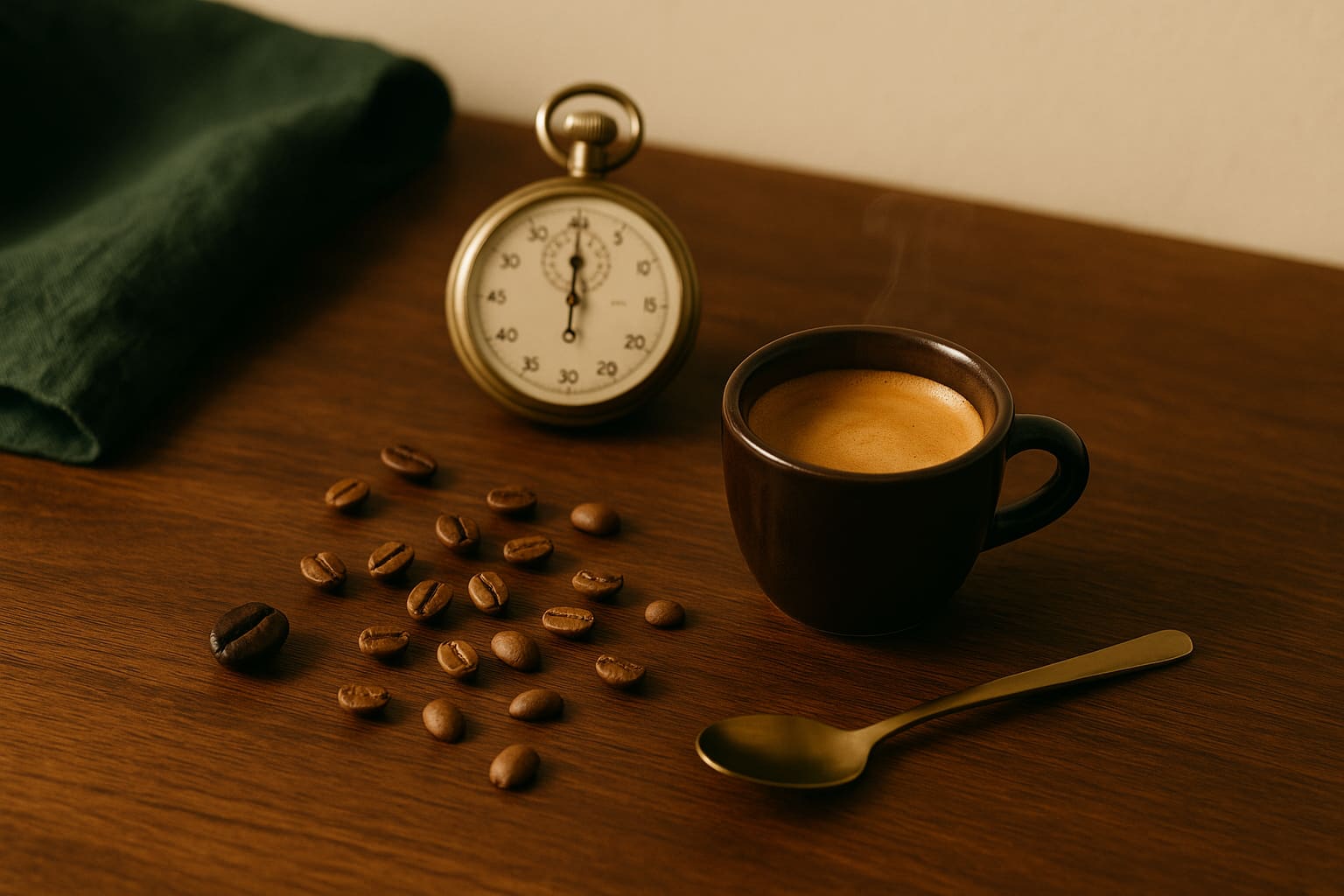
Caffeine can improve exercise performance, most consistently endurance. Strength, power, attention and reaction time may also benefit, but effects vary between people and tasks. 1
Dose-Response Relationship
Research commonly uses 3 to 6mg per kilogram of bodyweight. For a 75kg person, that is 225 to 450mg. This is a studied range, not a starting prescription. 1
Lower doses of 2 to 3mg/kg can work. Caffeine blocks adenosine receptors, helping reduce perceived fatigue. Feeling more alert does not mean lost sleep has been replaced. 2
EFSA identifies 200mg at once and 400mg across a day as amounts generally raising no safety concerns for healthy, non-pregnant adults. These are not targets or guarantees against symptoms. 3
That makes 450mg a poor default: it exceeds the daily guidance before any other caffeine is counted. Higher doses are not reliably better. 1 3
Half-Life and Timing
About 60 minutes before exercise is a common research protocol; timing varies with the product. Caffeine's average half-life is around 4 to 6 hours, with substantial individual variation. 1
For illustration, with a six-hour half-life, about 100mg of a 200mg dose taken at 2pm remains at 8pm. This is an estimate, not a measurement of your caffeine clearance. 1
In a crossover trial of 23 men, 400mg reduced deep sleep even when taken 12 hours before bed. Participants did not always recognise the disruption. 4
The same trial found no significant sleep effect from 100mg taken four hours before bed. That small, male-only study does not establish a safe cut-off for everyone. 4
For evening training, consider skipping caffeine rather than trading sleep for a session boost. See when to stop drinking coffee for more timing guidance. 4
Tolerance and Cycling
Regular use can change caffeine's effects, but losing the noticeable buzz does not establish that its performance benefit has disappeared. Evidence does not support a guaranteed 7 to 14-day reset. 1 5
You do not need routine abstinence before competition. Keeping intake modest can be a practical choice, but reserving caffeine for key sessions is not a proven way to prevent tolerance. 5
Coffee or Pre-Workout?
Coffee can deliver an effective performance dose. Its caffeine content varies with beans, preparation and serving size, so a long black is not a precise dose. 3 5
Pre-workout is not automatically better. Check the caffeine amount per serving and assess other ingredients separately. Do not assume evidence for caffeine validates the whole blend. 5
Put It Into Practice
- Trial a lower dose in training, not first on competition day. For a healthy 75kg adult, 150mg provides 2mg/kg. 2
- Record dose, timing, session performance and that night's sleep. Keep the lowest dose that gives a useful benefit. 4 5
- Count coffee, tea, energy drinks and supplements together. Avoid stacking products without checking their caffeine content. 6
If cutting back, reduce gradually because withdrawal can be unpleasant. Do not introduce abrupt abstinence just before an important event. 5 6
Discuss caffeine with your GP or pharmacist if you have palpitations, persistent insomnia or troublesome anxiety, take medicines, or are pregnant or breastfeeding. 6
For help fitting caffeine into your wider training nutrition, explore nutrition coaching.