Pre- and post-workout nutrition matters, but daily intake comes first. Timing becomes more important when meals are far apart or demanding sessions are close together. 1
The Protein Synthesis Window
There is no universal 30-minute protein deadline. A small study found muscles remained more responsive to protein 24 hours after resistance exercise performed to failure. 2
That was an acute study in 15 young men, not a measurement of long-term muscle growth. It does not establish an identical 24–48-hour window for everyone. 2
Eating within about two hours is a practical guide, not a cut-off. If you ate protein one to two hours before training, digestion can continue supplying amino acids afterwards, reducing the urgency. 1
Pre-Workout Nutrition
Aim to arrive fuelled without feeling overly full. A meal two to four hours before training, or a smaller snack closer to it, is a useful starting point. Adjust for your session and digestion. 3
Include carbohydrate for fuel and a protein source for amino acids. Keep fat modest, and reduce fibre near training if it causes discomfort. Familiar foods are more useful than a supposedly perfect formula. 3 4
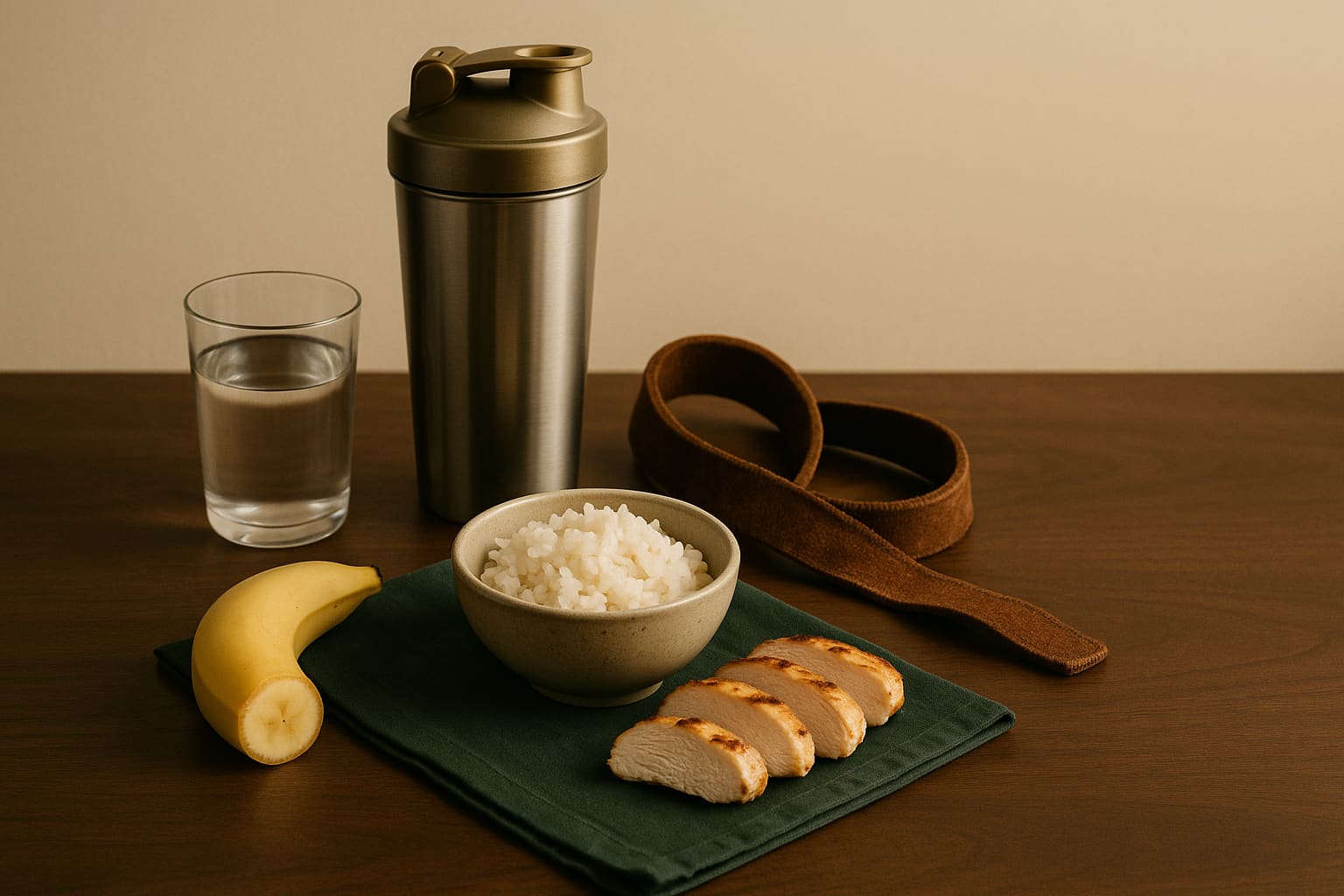
For example, try chicken with rice before an afternoon session. For an early start, experiment with a small yoghurt and banana or smoothie 30–60 minutes beforehand if tolerated. These are options, not required timings. 3
Post-Workout Nutrition
Around 20–40 g of protein is a useful starting range for many adults, not a universal requirement or ceiling. Needs vary with body size, age, training and protein source. 4
A meal can meet this need. Whey is rapidly digested and rich in leucine, an essential amino acid involved in stimulating protein synthesis, but those properties do not make a shake compulsory. 4
Use a shake when appetite or a delayed meal makes food inconvenient. For daily targets and food choices, see how much protein you need. 4
Carbohydrate and Hydration
Carbohydrate replaces glycogen, your stored exercise fuel. After an ordinary session with a day to recover, include it in regular meals rather than chasing a fixed recovery snack. 1
If another demanding session is within four hours, rapid replenishment may call for about 1.2 g carbohydrate/kg bodyweight/hour during recovery. This is a short-turnaround strategy, not a target after every workout. 1
Replace fluid lost through sweating. After substantial losses, include electrolytes, particularly sodium, through food or drinks. Supplements are not the only way to replace them. 5
Is Fasted Training Effective?
Fasted lifting does not automatically prevent progress. A 12-week trial in 28 young adults found improvements in muscle thickness and strength with both fasted and fed training, without significant between-group differences. 6
Participants trained twice weekly. This small trial does not prove equal outcomes for longer or harder programmes, or for everyone. 6
If fasted sessions feel worse, try eating beforehand. BCAA or EAA supplements are not a prerequisite; ordinary protein-rich food supplies essential amino acids. 3 4
For persistent gut discomfort or difficulty fuelling demanding sessions, ask a sports dietitian for individual advice. 3
For planning across training phases, see nutrition periodisation. If you would like help fitting meals around your routine, explore nutrition coaching.