
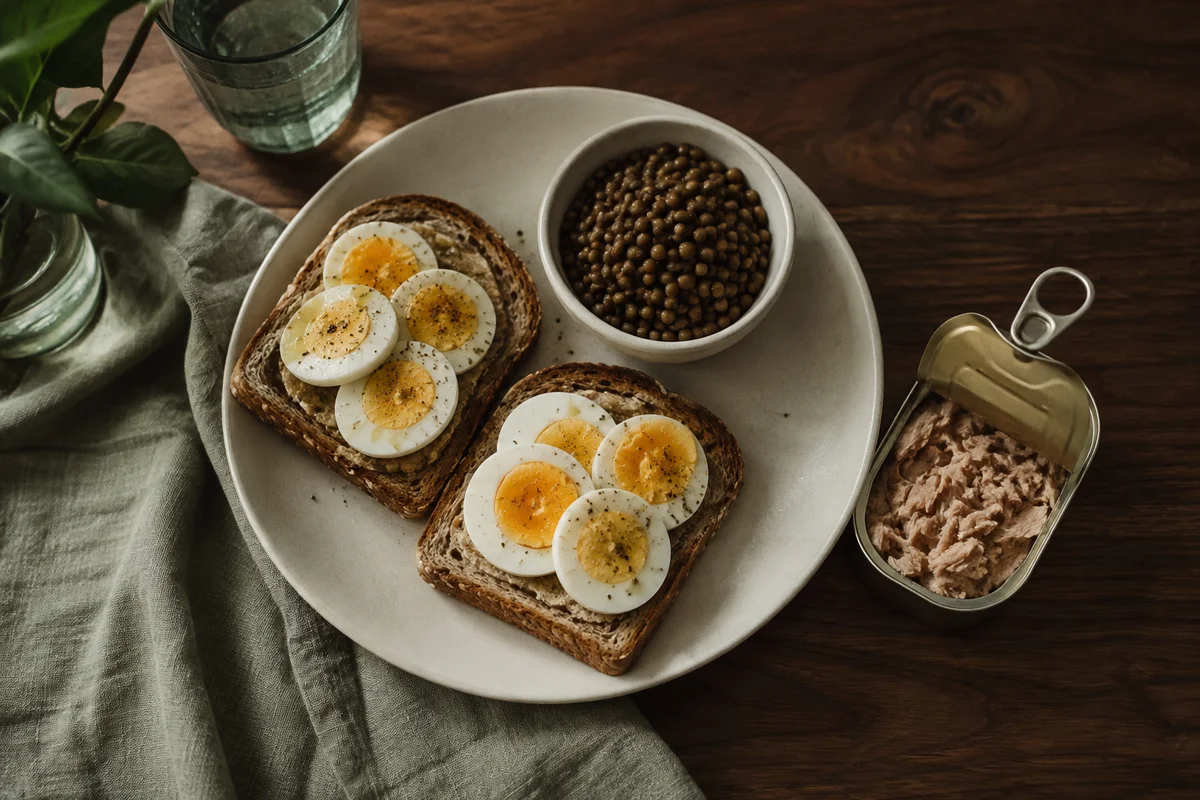
Affordable protein meals start with a food you will actually eat, a suitable portion and ingredients that work across several meals. You do not need a specialist product or a fresh recipe every night.
Try eggs on toast, a tuna sandwich, a chicken bowl, lentil soup or a lentil-and-tofu curry. Compare their cost using today's local prices, rather than treating any food as permanently cheapest.
Read the estimates before using them
The table uses the NZ Concise Food Composition Tables, 14th Edition (2021). It is a reproducible reference, not a claim that every current product matches it. The official database also offers newer online data. 1
Weights are edible portions: shell-free boiled eggs, cooked chicken and lentils, drained tuna and simmered firm tofu. Bread is weighed as purchased. Weighing raw food against a cooked entry gives a different result.
Listed protein counts only the named ingredients. Vegetables, rice, sauces and other additions are not included. Portions are examples, not personal protein prescriptions or complete daily menus.
Five meals to build around
| Meal base | Weighed ingredients | Approximate protein |
|---|---|---|
| Eggs on toast | 100 g boiled egg, 80 g wholemeal bread | 22 g |
| Tuna sandwich | 100 g drained spring-water tuna, 80 g wholemeal bread | 34 g |
| Chicken bowl | 100 g cooked, skinless roasted chicken breast | 28 g |
| Lentil soup and toast | 250 g cooked lentils, 80 g wholemeal bread | 27 g |
| Lentil and tofu curry | 150 g cooked lentils, 100 g simmered firm tofu | 26 g |
Calculations use protein per 100 g of 14.6 g for egg, 9.68 g for bread, 26.6 g for tuna, 28.2 g for chicken, 7.63 g for lentils and 14.2 g for tofu. Totals are rounded. 1
Eggs on toast
Serve the eggs sliced or mashed, with tomato or another vegetable you enjoy. The 100 g egg portion is roughly two eggs, but sizes vary. Use the edible weight when you want to reproduce the estimate.
Keep bread in the freezer if a whole loaf usually goes stale. This meal needs few ingredients and works for lunch as well as breakfast. The useful saving is avoiding wasted food, not buying a special high-protein loaf.
Tuna sandwich
Combine drained tuna with your preferred dressing and crunchy vegetables. The estimate uses 100 g of drained fish, not a 100 g unopened tin. Check whether the pack declares drained weight before comparing value.
Rotate the filling for variety. Leftover chicken or mashed egg can use the same bread and vegetables, although the protein total changes. You do not need to turn one convenient lunch into an everyday rule.
Chicken bowl
Add cooked chicken to rice, potatoes or another familiar starch, plus vegetables and a sauce. The protein figure covers the chicken only. Choose the other portions around appetite and your overall meal plan.
Compare breast with other cuts on the amount you will eat, accounting for bones and skin. A lower shelf price per kilogram does not automatically mean a lower cost per cooked portion.
Lentil soup and toast
Cook lentils into a thick tomato or vegetable soup and serve with toast. The estimate needs 250 g of cooked lentils in your portion, not 250 g of finished soup after adding stock and vegetables.
That is a substantial lentil serving. Start smaller if it is unfamiliar or uncomfortable. Our fibre guide explains gradual changes without forcing digestive symptoms.
Lentil and tofu curry
Simmer firm tofu and cooked lentils with vegetables and your usual curry flavourings. Serve with rice if wanted. The two protein ingredients share the job, so the recipe need not rely on a large portion of either.
Tofu varies considerably. Check your pack rather than substituting silken tofu and assuming the number stays the same. Canned lentils can save preparation time, but their label may differ from the cooked-lentil entry used here.
Compare value without chasing the lowest price
Food labels show average protein per serving and per 100 g or 100 mL. Use the matching weight basis to estimate what your portion supplies. 2
For a straightforward comparison, divide the cost of the portion by its protein grams, then multiply by 20. That gives the cost per 20 g protein. It is a shopping tool, not a recommended serving size.
A hypothetical NZ$2 portion containing 25 g protein costs NZ$1.60 per 20 g protein. These are invented arithmetic inputs, not a supermarket quote. Add the rest of the meal before comparing total dinner costs.
Also consider cooking time, fuel, storage and waste. Dry lentils may suit batch cooking; a can may suit a rushed evening. A larger pack only saves money if you can store and use it safely.
Keep the plan practical and safe
Start with two meal bases and overlapping ingredients. Check the fridge before shopping, then buy enough for the meals you have actually planned. Keep one quick option for the evening when cooking does not happen.
Follow NZ Food Safety guidance when batch cooking: refrigerate leftovers promptly, use shallow containers and reheat until piping hot. Cooked meals eaten cold should be used within two days. 3
These examples are not a treatment diet. Allergies, kidney disease, pregnancy or other clinical needs may require different choices. Personal advice takes priority over a generic meal table.
For the bigger picture, read how much protein you actually need. Start with a suitable daily approach, then choose meals that make it affordable and repeatable.