
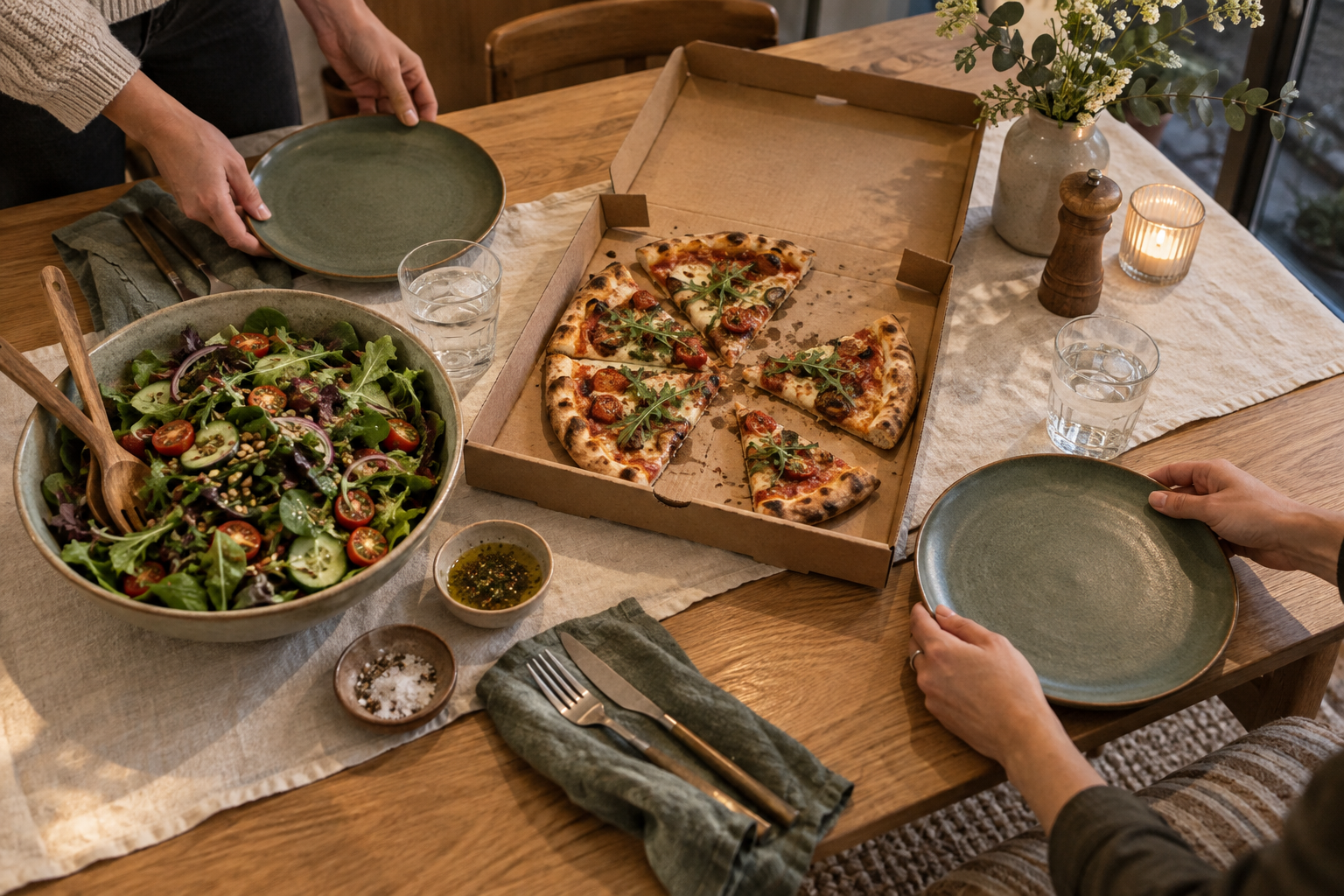
It is Friday, nobody wants to cook, and the household has already agreed on takeaway. The question is what would make that dinner work for you. Trying to replace everyone’s order with your ideal meal usually solves the wrong problem.
A workable plan respects appetite, budget, dietary requirements and the fact that dinner is shared. You can enjoy the food you ordered and make a few deliberate choices around it. Start with the meal that is actually happening.
Decide what you need before opening the menu
Ask yourself three questions: what would I enjoy eating, what would make this a satisfying meal, and what do I already have at home? That last question can save both time and an unnecessary extra order. Frozen vegetables, a bag of salad or a piece of fruit might already cover the addition you had in mind.
This is a planning exercise rather than a test of willpower. Make the decision early enough that you can check dietary requirements with the restaurant if needed. A menu description cannot establish whether a meal is suitable for a food allergy; ask the business about ingredients and preparation directly.
If you share food with people whose needs differ from yours, discuss the practical details before ordering. A separate side or individually suitable main is often easier than trying to make one dish serve every requirement.
Look at the whole dinner
Health NZ’s everyday eating guidance encourages a variety of vegetables and fruit, grain foods and protein foods. That is a useful direction for the overall pattern of eating, without demanding that every individual meal be identical. Health NZ: eating well for good health.
Apply that idea to your order. A curry and rice may work with a vegetable side. Pizza can sit alongside salad or cooked vegetables. A wrap may already include vegetables and a protein source, so consider what it contains before automatically adding more food.
Health NZ specifically includes takeaway or supermarket pizza with vegetables among its quick-meal ideas. That is a practical example: you can improve the shape of dinner without making everything from scratch. Health NZ: quick easy meals.
Make one choice that you can repeat
Choose a change small enough to use on an ordinary busy evening. Perhaps you prepare a vegetable side while someone collects the order. Perhaps you order a shared main and decide on extra sides after checking what everyone wants. Perhaps you put water on the table because that is what you would like to drink.
There is no requirement to adopt all three. Nor does adding vegetables cancel out the rest of a meal or guarantee a body-composition outcome. The point is to build a dinner you enjoy and a routine you can carry into another week.
Price matters too. A suggestion that doubles the cost of dinner is unlikely to become a useful habit. Use what is available and affordable, including frozen vegetables, rather than assuming that a fresh specialty salad is necessary.
Serve dinner so the decision is visible
When shared containers arrive, put the food you initially want on a plate and sit down to eat. You can then decide whether you want more. This is an optional way to make the meal easier to see, not a rule that you must stop at one plate.
People have different appetites and needs. A demanding training day, a smaller lunch or a later dinner may change what feels appropriate. Avoid comparing your plate with somebody else’s as though their needs establish your own.
If you already follow a clinical nutrition plan, keep that advice central. General takeaway suggestions cannot replace individual guidance for conditions that affect food choices or intake.
Review the friction, rather than scoring the meal
Afterwards, ask a practical question: what would make the next order easier? You might keep a suitable side in the freezer, save an allergy enquiry response, or agree on an earlier collection time. Record the useful detail rather than giving the meal a pass or fail.
A repeatable routine is more useful than an elaborate plan you abandon at the first busy Friday. Keep the part that worked, change the part that caused difficulty, and allow the rest of your week to continue normally.
If shared meals regularly make your nutrition plan feel impossible, bring a real menu and your household constraints to a coaching conversation. Explore Inception Nutrition coaching for support that starts with the meals you actually eat.