At home, your food routine has a kitchen, a supermarket and a reasonably familiar timetable. A work trip can remove all three. Breakfast is downstairs, lunch depends on the organiser, and dinner starts when the final conversation ends.
You do not need a second, stricter diet for travelling. You need a few decisions made before hunger and a busy schedule make them for you. Use the next trip to test a routine you can repeat.
Decide what breakfast needs to do
Before you travel, check whether breakfast is available and when it starts. An early flight or meeting may mean the hotel buffet is not an option. Knowing that on the previous evening is more useful than discovering it on the way out.
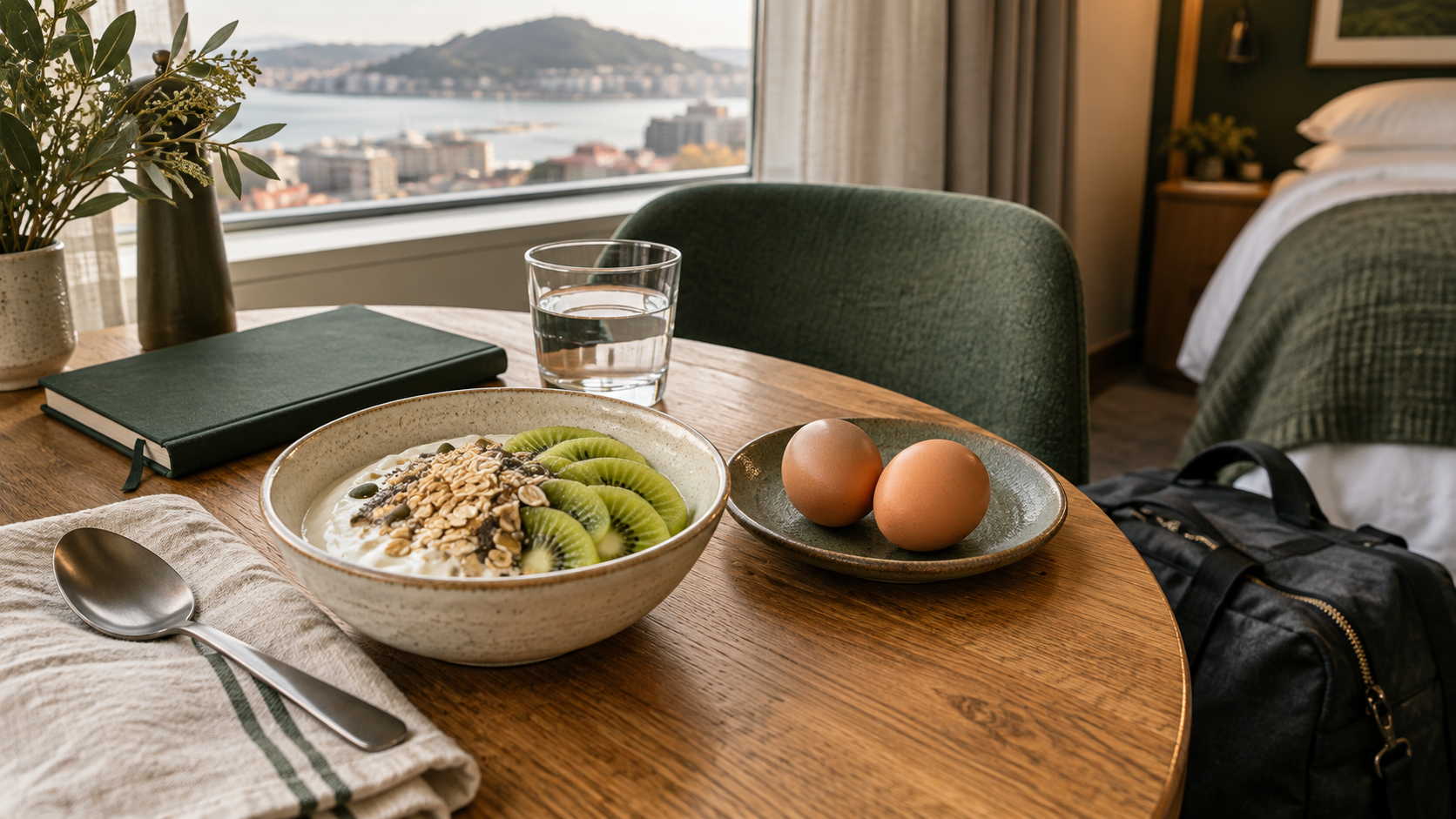
Build an ordinary meal from what is available. That might be yoghurt, oats and fruit; eggs with wholegrain toast; or a suitable plant-based alternative. Choose amounts that fit your appetite and the day ahead rather than eating a larger meal because it is included in the room rate.
Health New Zealand’s healthy-eating guidance supports varied meals that include vegetables or fruit, wholegrains and protein-rich foods. The practical application on a trip is to look for those components, not search for a perfect menu.
Give the conference day a fallback
If lunch is provided, ask about the format and tell the organiser about dietary requirements in advance. A grazing table, a plated lunch and sandwiches between sessions are different situations. None automatically means the day is off track.
Have a fallback for a genuinely missed meal. Depending on the venue and your needs, that could be buying a sandwich and fruit before the afternoon starts or locating a nearby café with a suitable meal. The useful preparation is knowing where you will get food, not carrying an entire alternative catering operation.
Packaged snacks can be convenient, but they do not need to become a compulsory second lunch. Use them when the gap, your appetite and the available options make them useful. For perishable foods, follow the storage directions and use proper temperature control; an all-day bag is not a refrigerator.
Make one decision before the late dinner
Work dinners often have a social purpose as well as a food purpose. You can take part without treating the meal as a test of willpower.
Look at the likely timing. If dinner is much later than you usually eat, decide whether an earlier snack or small meal would help you arrive comfortably hungry. At dinner, order something you actually want and consider whether the meal includes a useful mix of foods. If vegetables are absent, adding a side may be the simplest change available.
Avoid trying to compensate for a bigger dinner by inventing a punitive plan for the following morning. Return to an ordinary meal and the routine you can sustain.
Measure the friction, not just the food
After the trip, write down three things: where your plan worked, where food became difficult to access, and what one change would make the next trip easier.
For example: “Breakfast worked. Lunch disappeared during meetings. Next time I will protect a lunch break and identify a nearby option.” That is a usable observation. “I was bad for three days” tells you very little about what to change.
If you already work with a clinician or dietitian on a medical condition, keep their advice central and ask how to adapt it for travel. A general checklist cannot replace that plan.
Bring the real itinerary to coaching
Frequent travel is part of your working life, so it belongs in your nutrition plan. At Inception Nutrition, the relevant conversation is how your actual schedule can support the changes you want to make.
Explore nutrition coaching and bring a recent itinerary, the difficult meal situations and what you have already tried. It is much easier to improve a real conference Tuesday than a fictional perfect week at home.