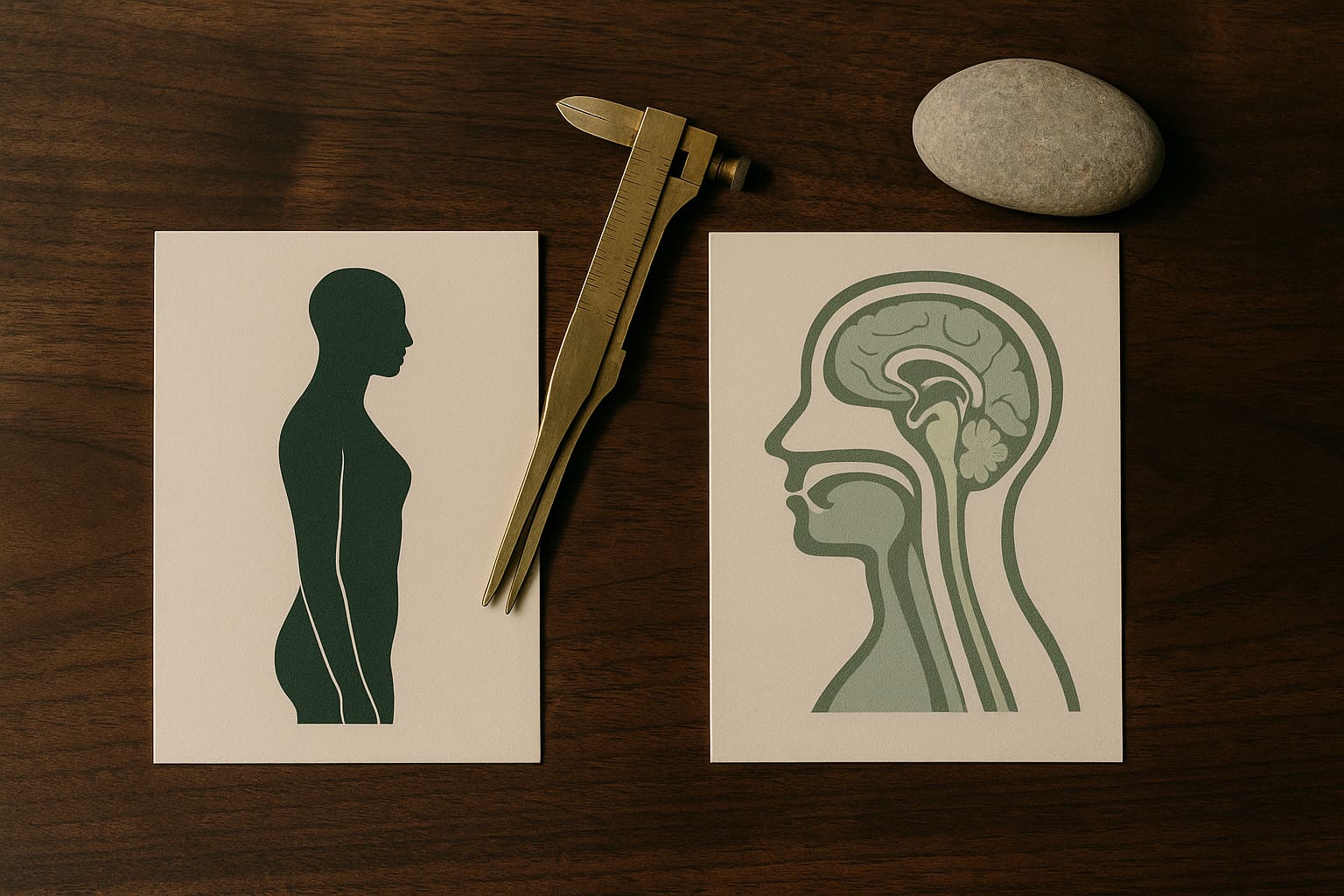
For training progress, BIA can be a practical option if the device performs well and testing conditions stay consistent. For a clinical bone-density question, choose an appropriate DXA examination. 1 2
DEXA and DXA mean the same thing. The useful choice is not simply the more expensive machine: it is the test that answers your question and could change what you do next.
How BIA works
Bioelectrical impedance analysis passes a small electrical current through the body and measures opposition to its flow. Equations turn that information into estimates of body water and composition. 3
Multi-frequency, segmental devices measure impedance through the limbs and trunk separately. Depending on the model, reports include estimated regional lean tissue, fat and total body water. 3
These are estimates, not images of muscle or abdominal fat. A regional result does not turn BIA into a direct measurement of skeletal muscle or visceral adipose tissue. 3
Hydration is an important limitation. In an experiment involving 11 active adults, one segmental device failed to track acute water changes accurately. Trunk and limb impedance responded differently. 3
That is why “dehydrated means a higher fat percentage” is not a dependable rule. Standardisation helps, but it cannot remove every source of uncertainty. 3
How DEXA works
Dual-energy X-ray absorptiometry uses X-rays at two energy levels. Different absorption by tissues allows software to estimate bone mineral and soft-tissue composition. Radiation exposure is low, but not zero. 2
A whole-body composition examination reports fat and lean soft tissue across regions such as the arms, legs and trunk. Some systems also report android/gynoid distribution and a visceral-fat estimate. 4
Lean soft tissue is not synonymous with skeletal muscle. It includes water and other non-fat soft tissues. A change in reported lean mass should not automatically be labelled muscle gained or lost. 4
Bone-density testing is a different booking question. Diagnostic osteoporosis assessment generally uses specific hip and spine measurements, not simply the bone figure on a whole-body composition report. 2
Ask what the appointment includes. Tell the clinic if pregnancy is possible, or if you have recently had contrast imaging or a nuclear medicine examination. 2
Accuracy versus repeatability
Accuracy means closeness to the reference value. Repeatability means getting similar results when a measurement is repeated under similar conditions. Neither alone proves that a device tracks change well. 1
In a study of 39 Indian adults, DXA had a smaller average body-fat error than the tested BIA approach against a four-compartment model. That supports DXA's usefulness, not universal superiority across devices and people. 5
Four-compartment models combine several measurements rather than treating one scan as ground truth. DXA is a useful reference method, but it still produces estimates. 5
A separate study tested 15 BIA devices in 73 adults; 37 returned after 12–16 weeks. Devices could be highly repeatable yet differ substantially in their ability to track body-fat change. 1
BIA therefore wins on convenience in some settings, not automatically on repeatability. Nor does “research-grade” establish a universal minimum detectable change. 1
Ask the provider what change exceeds their measurement error. Keep the same device and analysis method where possible. DXA facilities should assess precision for the measurements they report. 4
Cost and frequency in NZ
Compare like-for-like services. A scan-only appointment, an interpreted report and a combined bone-density/body-composition examination are different purchases.
Published examples checked on 6 September 2026 include:
- DXA body composition: Bone & Body Blueprint lists initial scans at NZ$179 in Te Awamutu and NZ$199 in Pukekohe. 6
- DXA bone density: the same provider lists NZ$229 and NZ$279 respectively. Combined appointments cost NZ$369 and NZ$399. These prices include GST. 6
- BIA: Tailored Nutrition in Auckland lists an InBody 570 scan-only appointment at NZ$40, or NZ$45 with an explanation. More extensive appointments cost more. 7
These are examples, not national averages. Confirm the current price, report inclusions and interpretation before booking. If coaching includes scans, check which appointments and locations are covered.
Some private services accept self-referrals. Bone & Body Blueprint explicitly does so for body-composition scans; check the policy of your chosen clinic. 8
For planning, you could review BIA every two to four weeks during a training phase. Treat that as an optional schedule, not a validated optimum or a promise of measurable change between visits.
A baseline and follow-up are the minimum for comparing change. More appointments are worth paying for only when the results are interpretable and useful to your decisions.
Bone-density retesting follows a different timetable, individualised to the baseline result, treatment and risk of bone loss. It is not automatically annual or every five years. 4
Which one you actually need
Training or fat loss: consider BIA if you want an accessible additional measure. Before booking, decide how you will use it alongside weight, waist measurements and training records, rather than letting one result dictate the plan.
Bone health: start with fracture-risk assessment. In NZ guidance, moderate or high risk may lead to DXA; being over 50 alone is not an instruction to buy a scan. 9
Discuss previous low-trauma fractures, menopause, family history and long-term corticosteroid use with your GP. These help establish whether bone-density testing is appropriate. 2
Visceral-fat concerns: ask whether DXA VAT estimation would change management. Its clinical utility remains uncertain, and a BIA trunk result should not be treated as the same measurement. 4
Competitive sport: consider regional DXA information if it answers a specific question. If you subsequently use BIA, establish a separate BIA baseline rather than joining unlike readings into one trend. 1 4
Hormone therapy, GLP-1 treatment or other medication changes: agree monitoring with your prescriber. Ask how strength, function and nutritional intake will be assessed, not just whether another scan can be booked.
If weakness or unintentional weight loss is developing, seek clinical advice rather than waiting for the next scheduled measurement.
What standardisation actually looks like
Ask for the device's written preparation instructions. Build a routine you can safely repeat:
- Use the same device, settings and approximate time of day.
- Empty your bladder beforehand.
- Keep meal timing consistent; use morning fasting only if appropriate for you.
- Avoid testing immediately after exercise.
- Wear similar light clothing and follow positioning instructions. 1
Keep your usual hydration rather than deliberately loading or restricting fluid. Record unusual drinking, sweating or dehydration so the result has context. 3
Follow the provider's alcohol and exercise restrictions rather than assuming one universal waiting period. Ask for an alternative protocol if fasting conflicts with your health needs or medication schedule.
DXA comparisons also need consistent preparation and positioning. This is not only a BIA issue. 4
What to do this week
- Write down the question: training progress, regional composition or bone health.
- Ask the provider about the device, examination type, preparation, price and measurement uncertainty.
- Decide what finding would actually change your next step.
- Keep a record of testing conditions and review the pattern, not a decimal place.
For help with the report itself, read How to Read Your Body Composition Scan. Choosing the method and interpreting the result are separate jobs.