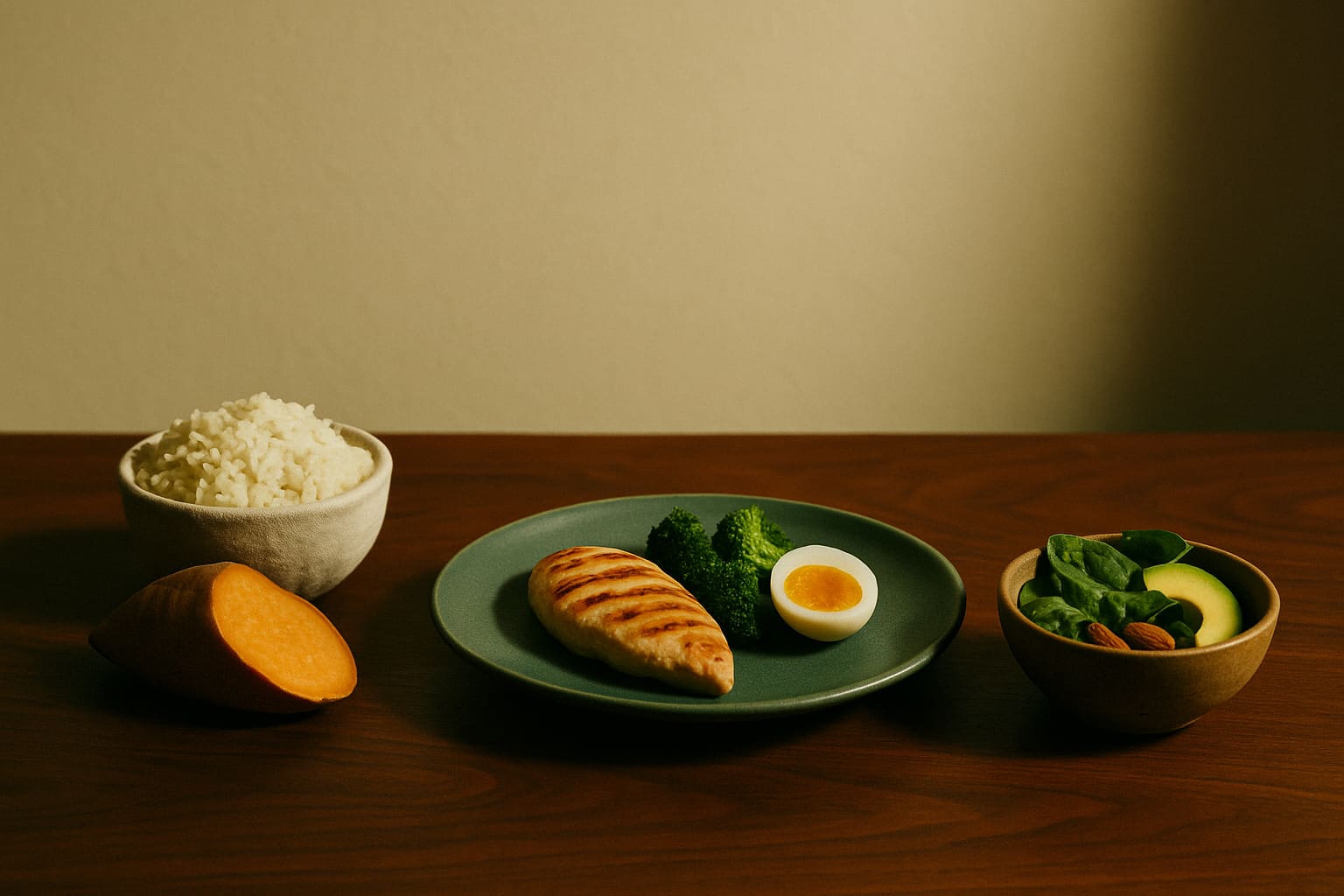
Performance Nutrition.
Protein thresholds, creatine, zone 2 training, body recomposition. Training only works as well as the nutrition feeding it. The right protocol amplifies a session, the wrong one cancels it.
27 articles in this pillar.

Creatine for Women: What the 2026 Evidence Shows
The myth that creatine bloats or masculinises has been buried for a decade. The evidence in women keeps strengthening. Here is what now reads as settled.

The Executive Brain: How Nutrition Impacts Cognitive Performance
Your brain consumes 20% of your daily energy while comprising 2% of your body mass. What you eat directly determines how well it performs.

Macros Without the Dogma: Protein, Carbs, and Fat Explained
Most macro arguments online are tribal. The principle is simpler than any of them: protein first, then fats and carbs as energy levers around your training and goals.

Martial Arts Nutrition: Fuelling for Combat Sports Performance
Combat sports demand a unique nutritional approach: managing weight for competition while maintaining power, speed, and cognitive sharpness under physical stress.

Training Nutrition for Women: What's Different and Why It Matters
Women's nutrition needs differ from men's in ways that most generic advice completely ignores. Here is what the research says about training nutrition for women.

Nutrition Periodisation: How to Eat for Different Training Phases
Your nutrition should change when your training changes. Here is how to periodise your diet to match your training phases for maximum results.

Creatine in 2026: What New Research Tells Us Beyond Muscle
Creatine is the most studied supplement in sports nutrition history, and the research now extends far beyond muscle. Here is what we know in 2026.

Protein Requirements: How Much You Actually Need (Based on Your Goals and Data)
Generic protein calculators use body weight alone. Your actual requirements depend on lean mass, activity, age, and goals, all of which vary enormously between individuals.

The Skinny Fat Problem: How to Recompose Without Extreme Dieting
Normal weight but high body fat is more common and more dangerous than most people realise. Body recomposition, not weight loss, is the solution.

The Business Executive's Guide to Optimising Cognitive Performance Through Nutrition
Your nutrition directly affects your decision quality, focus, and mental endurance. For executives, this makes dietary strategy a professional competitive advantage.

Time-Restricted Eating: When the Eating Window Helps and Hurts
Sixteen-eight is a default that does not fit every life. For some clients it sharpens metabolic markers. For others it tanks performance and recovery. The fit is the variable.

Recovery Nutrition: What Your Body Needs After Intense Training
Results happen during recovery, not during training. Your post-training nutrition determines whether your body adapts and grows or breaks down further.

Collagen Protein: Why It Matters for Performance (Not Just Skin)
Collagen is not a replacement for whey, it is a complement. Understanding the distinct amino acid profiles explains why both have a place in performance nutrition.

Caffeine and Performance: The Science of Timing, Dosing, and Tolerance
Caffeine is the most widely used performance enhancer in the world. Understanding its pharmacology helps you use it strategically rather than habitually.

Hydration Beyond Water: Electrolytes, Performance, and What Actually Matters
Drinking more water is not always the answer. Electrolyte balance matters as much as fluid volume for training performance and health.

Iron Deficiency in Active Women: The Markers a Standard GP Test Misses
Ferritin in single figures while haemoglobin reads normal. The standard NZ GP iron panel will miss this every time. Active women pay the energy bill before the diagnosis arrives.

How Much Protein for Body Composition Change?
The right protein target for body composition change is 1.6 to 2.2 grams per kilogram of lean body mass per day. The number is non-negotiable. How you hit it is up to you.

Resistance Training After Sixty: The Sarcopenia Reversal Protocol
Lean mass loss after sixty is not inevitable. The intervention is unglamorous and unfashionable. It also works.

Bone Density After Fifty: The Protein Threshold Most Women Are Below
Bone is built and held by mechanical load and adequate amino acids. After fifty, both tend to fall. Most women are below the threshold for either. Here is what the threshold actually is.

GLP-1 and Exercise Performance: Training Adjustments for Optimal Results
Training on a significant caloric deficit requires adjustments. Here is how to maintain exercise performance and protect lean mass while on GLP-1 medications.

Body Recomposition: How to Lose Fat and Build Muscle at Once
Conventional advice splits the year into bulk and cut. The data on simultaneous fat loss and lean mass gain is now strong enough that most NZ clients should not be cycling at all.

How Much Protein Do Women Over 40 Actually Need?
The threshold most coaching guides quote is below what the research now supports. Lean mass holds the decade. Protein is what holds the lean mass.

Why Your GLP-1 Protocol Needs a Nutrition Strategy (Not Just a Prescription)
A prescription alone is not a strategy. Without structured nutrition, GLP-1 medications can cause as much harm as good through lean mass depletion.

Strength Training for Women Over 50: The Lean Mass Threshold
Lean mass after fifty is the variable that decides how the next two decades look. Most NZ programmes for this group still treat it as an afterthought. The threshold is not subtle.

GLP-1 and Muscle Mass: How to Preserve Lean Tissue During Rapid Weight Loss
Rapid weight loss without muscle preservation is a recipe for metabolic decline. Here is how to protect lean tissue while maximising fat loss on GLP-1 medications.

Pre and Post Workout Nutrition: What the Evidence Actually Supports
The 'anabolic window' has been overhyped, but nutrient timing still matters. Here is what the evidence actually supports about eating around training.

Zone 2 Training Explained: Why It Matters for Longevity
Most NZ adults train at zone three intensity, then call it cardio. Zone two is what builds the mitochondrial floor. Different work, different result.
Stop guessing.
Start seeing.
Take the free metabolic audit. Five minutes. No commitment. You leave with a clear read on where your baseline sits and which programme fits your goals.